An independent guide · not an installer
Solar Panel Installer Southport: an independent guide to planning panels on your roof
Before you ask any firm round, it helps to know what your roof can take. Southport's villas, semis and bungalows have their own quirks: hipped faces, slate, bays, chimneys and, in places, conservation area rules. This guide measures them with you, prices them from the government's own records, and shows you how to check an installer.
Southport solar in four numbers
- A south roof makes, per kW a year
- 1,005 kWh
- North West average, per kW (up to 4 kW)
- £1,800
- Sefton homes built before 1919
- 27.5%
- Panels on a 7.5 m hipped front
- 7
PVGIS 5.3 for central Southport; DESNZ 2025/26 cost data; HMRC council tax records, March 2026; our roof planner with a 440 W panel.
Start with the roof, not the brochure
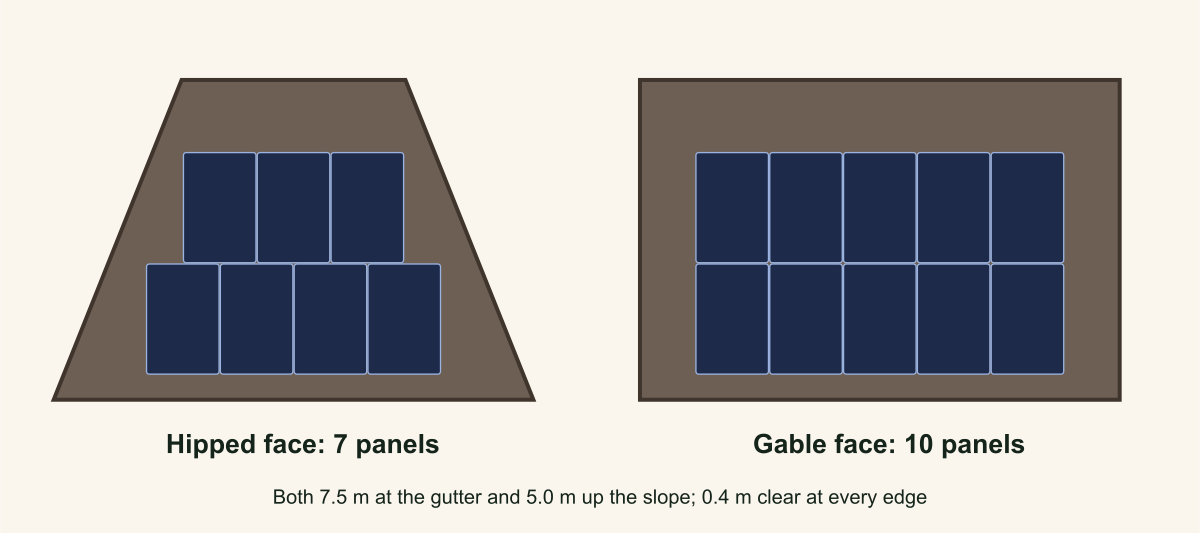
Most solar marketing starts with savings. A sound plan starts with the roof, because the number of panels it takes sets everything else: the size of the system, its price and what it makes. Southport has a lot of hipped roofs, on Victorian villas and inter-war semis alike, and hips cut into every row. MCS's installation standard asks for panels to stay 400 mm from every roof edge unless extra measures are taken. With that margin and a 440 W example panel, a hipped front 7.5 m long at the gutter and 5 m up the slope takes 7 panels; a gable face of the same size takes 10.
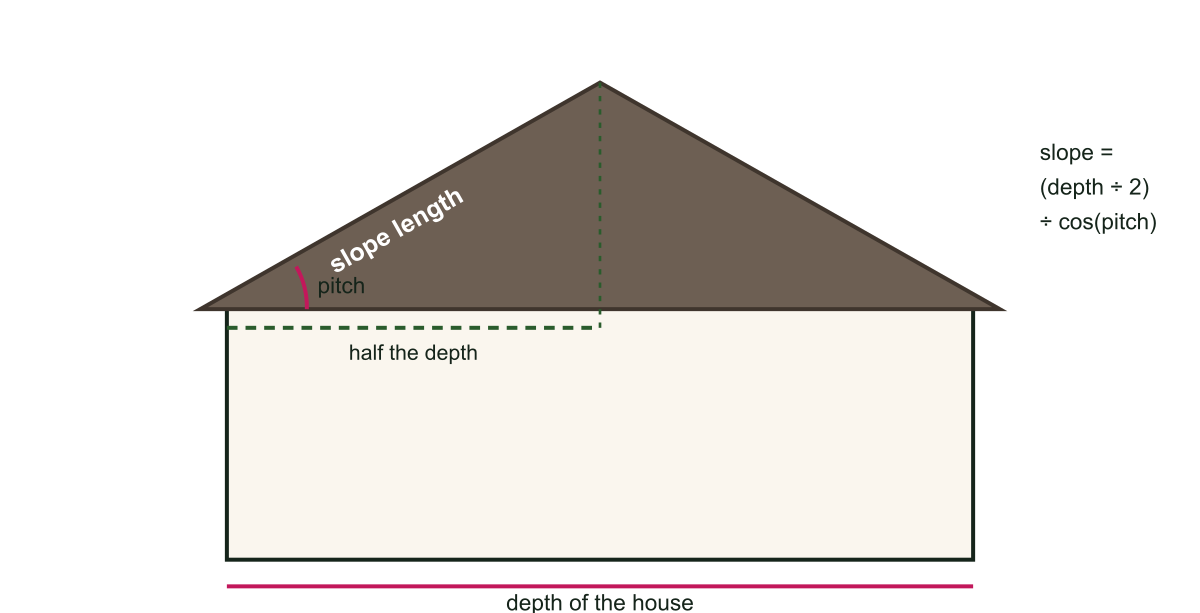
The roof planner does that sum for your own face, gable or hipped, upright or on their side, and turns it into kW and yearly output for Southport. If you do not know your measurements, measure the roof from the ground with a brick count and the house depth.
Southport houses and what they mean for panels
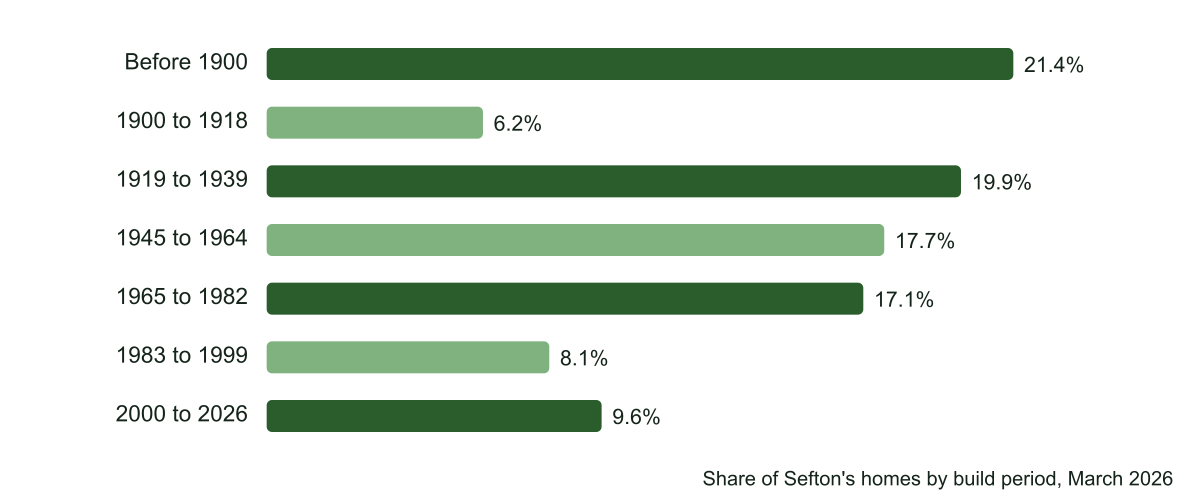
Southport is a town of semis and villas. In the 2021 Census, 47.5% of households in the Southport constituency lived in a semi-detached house and 19.3% in a detached one; only 6.5% lived in a terrace, against 18.4% across Sefton. About one in four lived in a flat, 7.7% of them in a converted or shared house. Across Sefton, 27.5% of homes were built before 1919, well above the 20.4% for England and Wales, and only 9.6% from 2000 onwards.
Victorian and Edwardian villas
Big slate roofs with hips, valleys, bays and stacks. Plenty of space, but plan round the features.
Bungalows
Low roofs make access cheap and cleaning easy; the faces are smaller and often hipped.
Flats and conversions
A shared roof needs the freeholder's agreement; plug-in panels are a new option.
Slate roofs
Check the roof's life first; fixing through slate takes care and the right brackets.
What a Southport roof makes
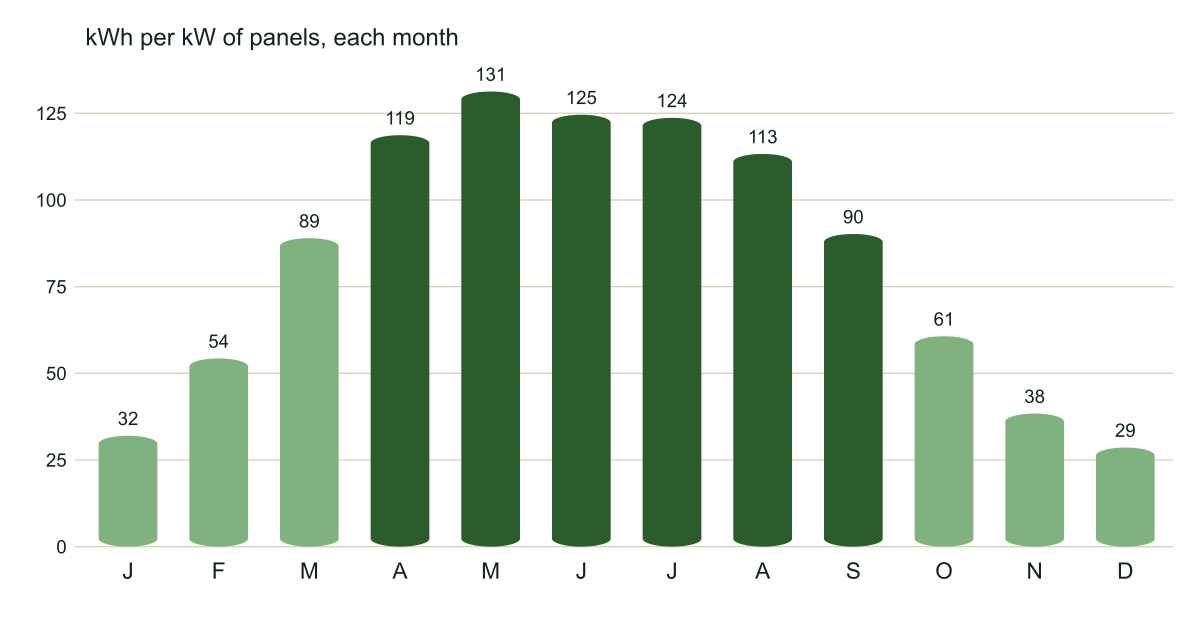
PVGIS, the European Commission's solar model, gives a south-facing roof at 35 degrees in central Southport about 1,005 kWh a year for each kW of panels, after typical losses. That is more than it gives inland: about 937 kWh in central Warrington, for example. Across the town the figure barely moves, from 986 to 1,005 kWh between the points we checked.
East and west roofs make about four-fifths of a south roof's output, and do a little better at a shallow pitch. See sunshine and output for every direction and pitch, and east and west roofs for why the pitch matters.
The rules that apply in Southport
Most roofs: no application
Panels on a house roof are permitted development if they stand no more than 0.2 m off the slope and stay below the ridge. See planning rules.
9 conservation areas
Lord Street, the Promenade, Birkdale Park, Birkdale Village, West Birkdale, Gloucester Road, Churchtown Village, North Meols and Hesketh Road. None has an Article 4 direction on roofs or solar. See conservation areas.
Listed buildings need consent
Panels on a listed house need planning permission and listed building consent from Sefton Council. Check the National Heritage List first.
The network is told
Your installer notifies SP Energy Networks. Larger systems need its approval before connection; see quote to switch-on.
The money, with every assumption shown
Solar panels are a long-lived asset rather than a running cost: once they are paid for, each unit they make costs nothing, and the question is how much each unit is worth to you. That depends on how much you use at home, what your supplier pays for the rest, and what the system cost to put up. These pages work it through.
Costs
North West averages of £1,800 per kW up to 4 kW and £1,627 per kW for 4 to 10 kW (DESNZ 2025/26), applied to Southport roofs.
Is it worth it?
First-year value for four example roofs, at the October to December 2026 price cap and two export rates. No payback promises.
Grants
Sefton Council runs the Warm Homes: Local Grant, which includes solar panels, for privately owned homes rated EPC D or below that meet an income test. Everyone else has 0% VAT and the Warm Homes Loan.
Group buying
The Liverpool City Region's Solar Together rounds: in the 2024-25 round, 53 Sefton households had panels fitted. Never a grant, and never sign on the spot.
Batteries
When the summer surplus is worth storing, and how to size a battery to your evenings.
Choosing the firm that fits them
This site does not fit panels, which is why it can tell you how to judge the firms that do. Look each one up on the MCS register and its consumer code's list, have at least two survey the roof in person, and compare written quotes on the same terms: panels, inverter, predicted output and how it was worked out, scaffolding, warranties and payment stages.
- Finding an installer: registers, the survey and the questions to ask.
- From quote to switch-on: the network operator, the scaffold, the roof day and the paperwork.
- Gulls and pigeons: bird mesh, the law on nests and the rest of the upkeep.
- The glossary: battens, hips, G98 and the other words on a quote.
More from the guide
- Southport roofs in numbers
- Sunshine and output
- East and west roofs
- All guides
- FAQs
- Sources
- About this guide
- Contact
Figures checked at source on 3 November 2026: European Commission JRC: PVGIS 5.3 solar output model · DESNZ: small-scale solar PV costs by region, 2025/26 · GPDO 2015, Schedule 2, Part 14 (solar permitted development) · SI 2026/896: changes to solar permitted development from 27 August 2026 · SP Energy Networks: connecting to the grid.
Questions people in Southport ask
Is this site a solar panel installer?
No. Solar Panel Installer Southport is an independent guide published by SEO-DONS LTD. It does not sell, survey or fit panels and does not pass your details to installers. It helps you plan the job and check the firms you find.
How many solar panels will fit on my Southport roof?
It depends on the face's size and shape. With a 440 W example panel and the 0.4 m edge margin MCS's installation standard asks for, a hipped front 7.5 m long at the gutter and 5 m up the slope takes about 7, a plain gable face of the same size about 10, and a large villa slope about 13. The roof planner works it out for your own measurements.
How much do solar panels cost in Southport?
There are no Southport-only figures. The government's 2025/26 averages for the North West were about £1,800 per kW for systems up to 4 kW and £1,627 per kW for 4 to 10 kW, so a 4 kW system at the regional average comes to about £7,200.
How much electricity will panels make in Southport?
PVGIS gives central Southport about 1,005 kWh a year for each kW of panels facing south at 35 degrees. East and west roofs make roughly four-fifths of that. Shade on your own roof matters more than where in the town you live.
Who connects solar panels to the grid in Southport?
Your installer notifies SP Energy Networks, which runs the local network as SP Manweb. Small systems are connected first and notified; larger ones need approval before connection.
Want a second opinion on your roof or a quote?
Tell us about the house, the roof or the quote, with your Southport postcode. The message goes to SEO-DONS LTD, the company that publishes this independent guide, and we answer by email. It costs nothing and commits you to nothing.
What happens next
- Fill in the form. A full postcode tells us which part of Southport, and which rules, apply.
- We read what you sent and reply by email with the figures and sources that fit your house.
- What you do next, and which firm you use, is your decision alone.